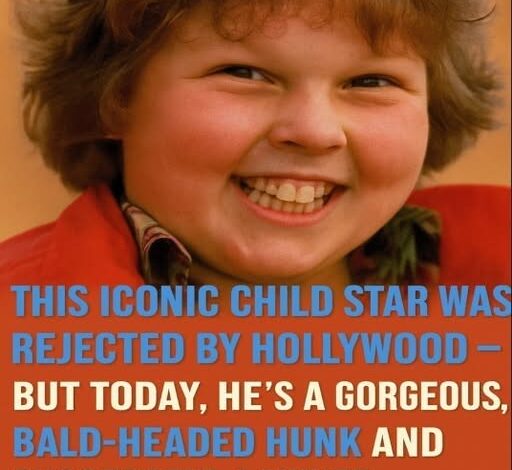
Some child stars spend the rest of their lives trying to return to the moment when the world first loved them.
Jeff Cohen chose a different path.
In the 1980s, Cohen became unforgettable to movie audiences as one of the standout young performers in The Goonies. With his humor, energy, confidence, and emotional honesty, he created a character who felt larger than life but still deeply human. He was funny without seeming like he was trying too hard. He was vulnerable without losing his sense of courage. He brought warmth to the screen in a way that made audiences feel as though they were not simply watching him perform, but getting to know him.
To generations of fans, he became part of one of the most beloved adventure films of the decade. He was the kind of child actor people remembered instantly, not only because of the lines he delivered, but because of the spirit he brought to them. His performance had a rare kind of sincerity. It captured the excitement, awkwardness, fear, loyalty, and imagination of childhood all at once.
To many viewers, Jeff Cohen was simply a talented kid having the time of his life in a film that would become a classic.
But behind the scenes, there was more to his story.
Cohen was already showing the determination and resilience that would define him long after his acting career ended. During the making of The Goonies, he reportedly dealt with health challenges, yet he continued to show up with commitment, enthusiasm, and professionalism. He understood that being part of a film was not just about attention or applause. It was work. It was responsibility. It was a chance to contribute to something bigger than himself.
That sense of responsibility would stay with him.
Because childhood fame can be both magical and unforgiving.
For a while, Hollywood celebrates young performers for exactly who they are. Their faces, voices, personalities, and natural charm become part of what makes them marketable. But as they grow older, the same industry that once embraced them can suddenly become uncertain about what to do with them next. The transition from child actor to adult performer is rarely simple. Many young stars find themselves trapped inside the image that first made them famous.
Cohen experienced that painful shift.
As adolescence changed his appearance and the industry moved on to new faces, casting directors struggled to see him outside the role audiences remembered. The qualities that had once made him stand out as a child no longer fit neatly into Hollywood’s narrow expectations. Roles became harder to find. Opportunities slowed. The phone did not ring the way it once had.
For someone who had known fame so young, that kind of rejection could have been devastating.
It could have made him bitter. It could have left him chasing the past. It could have convinced him that his greatest success was already behind him before adulthood had even fully begun.
But Jeff Cohen refused to let one role, no matter how beloved, become the boundary of his life.
Instead of clinging desperately to an industry that no longer seemed to have a place for him, he stepped back. He began to rebuild his sense of identity away from the camera. He focused on school, personal growth, athletics, leadership, and the everyday experiences that fame often interrupts. He allowed himself to become more than a former child actor.
That decision was not an admission of failure. It was an act of courage.
For many performers, leaving the spotlight can feel like disappearing. But Cohen began to understand that visibility and value are not the same thing. Being recognized by strangers is not the only measure of success. Applause can be meaningful, but it is not the same as purpose. Fame can open a door, but it cannot tell a person who they are once that door begins to close.
College gave Cohen the space to ask those questions. Away from the constant pressure of auditions and public recognition, he had room to discover new strengths. He was no longer only the kid from The Goonies. He was a student, a teammate, a leader, and a young man trying to decide what kind of future he wanted to build.
That period became a major turning point in his life.
One of the most important influences during his transition came from someone who had known him during his earliest success. Richard Donner, the director of The Goonies, had seen Cohen’s talent and work ethic up close. But Donner also saw something beyond acting. He recognized Cohen’s intelligence, discipline, and potential to succeed in another part of the entertainment world.
Donner encouraged him to continue his education and helped him see that leaving acting did not mean leaving the industry entirely.
That encouragement opened a new possibility.
Cohen began to recognize that entertainment was not only about what happened in front of the camera. Behind every film, television show, performance, and creative project were contracts, negotiations, rights, business decisions, legal protections, and people working to make sure artists were treated fairly. The industry that had shaped his childhood was also an industry built on deals, representation, trust, and advocacy.
So Jeff Cohen turned toward law.
It was a practical choice, but it was also deeply connected to his past. His experience as a child actor gave him a perspective most attorneys could not easily claim. He knew what it felt like to be young, hopeful, vulnerable, and dependent on adults to protect his interests. He understood the excitement of creative opportunity, but he also understood the uncertainty that comes with it. He knew that performers often need someone in their corner who can see both the dream and the danger.
That insight became one of his greatest professional strengths.
Cohen pursued his education with the same commitment he had once brought to acting. He studied, trained, and worked to build a new identity based not on nostalgia, but on skill. Over time, he became a respected entertainment attorney, helping artists, creators, producers, and industry professionals navigate complicated deals and protect their futures.
The boy who had once captured audiences with his screen presence became a man known for judgment, strategy, loyalty, and integrity.
That transformation is what makes his story so powerful.
Jeff Cohen did not reject his past. He did not pretend The Goonies had never happened or distance himself from the role that made people love him. Instead, he honored that chapter while refusing to be trapped inside it. He remained connected to his former castmates and to the film’s legacy, but he also built a life that belonged fully to the adult he had become.
There is something deeply meaningful in that.
Many people are defined by an early success, an early failure, or an identity others refuse to let them outgrow. Cohen’s journey shows that reinvention does not require erasing the past. Sometimes it means carrying the lessons forward into a new form. Sometimes the thing that once made a person famous can become the foundation for a different kind of purpose.
His story also challenges the way people think about success. In entertainment, success is often measured by visibility: more roles, more cameras, more interviews, more recognition. But Cohen proved that a life can become even more meaningful after the spotlight fades. He found a way to move from performance to protection, from being represented to representing others, from being a child inside the industry to becoming an adult who helps others navigate it.
That is not a retreat.
That is growth.
Jeff Cohen’s path is a reminder that fame is not the same as fulfillment. A person’s most important role may not be the one that makes them famous. It may be the one they choose later, after disappointment, after change, after they have had to rebuild themselves without applause.
For Cohen, childhood fame opened the first door. But resilience, education, humility, discipline, and adaptability helped him build something lasting. He became proof that losing one version of a dream does not mean losing the future. It may simply mean discovering a stronger, wiser, more purposeful version of yourself.
The world may always remember him as one of the unforgettable kids from The Goonies. That will always be part of his story. But it is not the whole story.
His life after the film shows that reinvention can be its own kind of triumph. It shows that stepping away from the spotlight can sometimes lead to a deeper kind of success. It shows that the end of one chapter can become the beginning of a far more meaningful one.
Jeff Cohen did not spend his life chasing the fame he once had.
He built a future from it.
And in doing so, he became something more than a former child star. He became an example of how to grow beyond the role that made the world notice you, and how to turn early fame into lasting purpose.