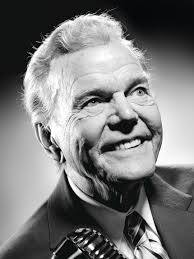
Those distant summer afternoons haven’t faded—they linger in small, sensory ways: the scent of sun-warmed fields, the rustle of paper-wrapped lunches, and above all, the steady, unmistakable voice of Paul Harvey. He didn’t just occupy airtime; he gave it shape and meaning, transforming ordinary moments into something reflective, almost sacred. Through his words, silence wasn’t empty—it was intentional, a space where stories could breathe and lessons could quietly settle.
For generations of listeners, his voice became more than background noise. It was a daily ritual, a familiar presence that offered reassurance in an unpredictable world. His storytelling carried a kind of moral clarity that didn’t feel forced or preachy, but grounded—rooted in values like faith, responsibility, and family. These weren’t abstract ideas; they were presented as the framework of everyday life, steady and dependable.
What made him truly distinctive was his rhythm. In a time long before constant notifications and endless scrolling, he understood the power of pause. He allowed silence to speak just as loudly as his words, giving listeners time to think, to absorb, to connect. That deliberate pacing now feels almost radical, especially in a world that rarely slows down long enough to listen.
His signature segment, The Rest of the Story, was more than a clever hook. It was an invitation to look deeper—to question first impressions, to uncover hidden truths, and to remember that meaning often lies beneath the surface. Each story carried a sense of discovery, reminding listeners that there was always more than what first met the eye.
Remembering him isn’t just about nostalgia for a broadcaster—it’s about longing for a certain kind of stillness, a pace of life where connection felt simpler and more direct. A time when a farmer pausing at midday, a family gathered around a table, and a voice on the radio could be enough to anchor the day.
In that way, what people miss most isn’t just the man or his stories—it’s the feeling he created. A sense that, even in a noisy world, there was still room for reflection, for meaning, and for a quieter kind of truth waiting to be heard.