In the aftermath of the crash, Roatán’s coastline transformed into something heavier than a place—it became a space of waiting. People gathered not out of ceremony, but out of need. Faces drawn, voices hushed, hands wrapped tightly around candles that flickered against the ocean wind. Every passing minute stretched longer than the last, filled with a quiet hope that refused to disappear, even as fear settled deeper with each update that didn’t come.
Families stood close together, scanning the horizon as if answers might rise from the water itself. Names hadn’t all been confirmed yet, and in that uncertainty lived a fragile kind of hope—the kind that clings to possibility even when reality begins to close in. Nearby, emergency crews worked against conditions that seemed almost impossible. The sea offered no cooperation. Waves crashed against sharp rocks, currents pulled unpredictably, and visibility beneath the surface was nearly nonexistent. Still, divers went down, again and again, moving carefully through debris that told its own silent story.
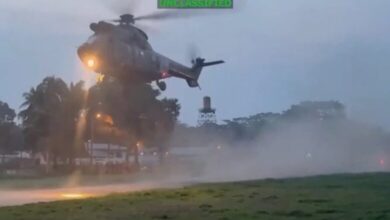
Above, helicopters traced slow, deliberate circles, their blades cutting through the heavy air. Below, the work continued in near darkness, each recovery effort carrying the weight of not just loss, but closure—bringing something back for the families who waited on shore, holding onto anything they could.
Then came the news that shifted everything.
Aurelio Martínez was gone.
The announcement didn’t spread so much as it rippled outward, moving quickly through communities that already felt the tremor of loss. In Honduras, in Belize, and far beyond, among Garífuna communities across the world, it landed with a force that words struggled to contain. He wasn’t just a musician. He was a voice that carried history, identity, and resilience. His songs weren’t entertainment—they were memory, preservation, connection.
Within hours, his music filled the streets—not through speakers arranged for an event, but through phones, radios, and voices. People gathered where they could, lighting candles, sharing stories, letting the sound of his voice fill the spaces left behind. Some stood in silence. Others wept openly. There was no single way to hold that kind of loss.
Officials spoke of investigations, of timelines, of determining what went wrong. And those answers will matter in their own way. But for many, they sit in the background, secondary to something far more immediate. Because what’s been lost isn’t just measured in facts or reports.
A plane went down, yes.
But something larger disappeared with it.
A presence. A voice that carried generations forward. A connection that can’t be easily replaced.
And in the quiet that follows—between the waves, between the songs—there’s a growing understanding that some absences don’t just leave a gap. They change the way everything sounds afterward.