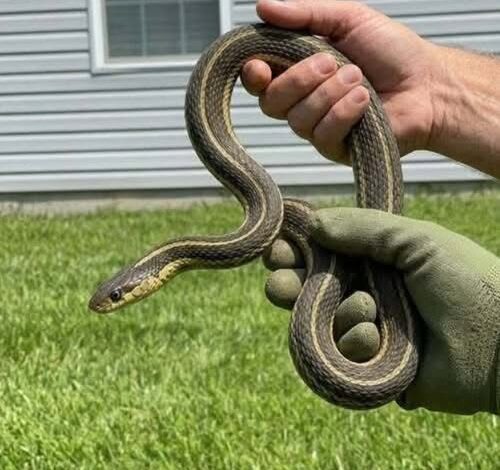
You walk into the basement for something simple.
Maybe a storage box.
Maybe a tool.
Maybe a forgotten holiday decoration tucked behind old paint cans and dusty shelves.
The light is dim. The air feels cool. Everything seems ordinary until something moves across the concrete floor.
A long, sinuous shape slides through the shadows.
Scales catch the light for half a second.
Then panic hits.
Your chest tightens. Your heart pounds hard against your ribs. In an instant, your mind fills with images of fangs, venom, sudden strikes, and worst-case possibilities. The room you thought belonged to you suddenly feels unfamiliar, almost hostile.
You are not the only person who has experienced that shock.
Across the country, homeowners occasionally discover that their private spaces have been breached by an uninvited, cold-blooded guest. A snake in the basement. A snake in the garage. A snake curled near a laundry room corner or slipping along a hallway wall.
The discovery feels personal.
But the reason it happened is usually far less mysterious than fear makes it seem.
A snake in your home is not there because it is hunting you.
It is not there because it wants confrontation.
It is not there because your house has suddenly become cursed, unsafe, or invaded in some dramatic way.
Most of the time, the snake is there for one of three simple reasons:
food, shelter, or temperature.
Understanding that can make the situation feel less like a nightmare and more like a problem that can be handled calmly.
Still, the first few seconds matter.
The most important rule is also the hardest one to follow: do not scream, swing, stomp, or try to attack it. Your instinct may tell you to act immediately, but sudden movement can make the situation more dangerous. Snakes usually want distance from humans. They do not see people as prey, and most will avoid interaction whenever possible.
A frightened snake is more dangerous than a calm one.
If it feels cornered, trapped, stepped on, or threatened, it may defend itself. That is when bites are most likely to happen. Not because the animal is aggressive by nature, but because it believes escape is no longer available.
So the safest response is distance.
Stop moving.
Step back slowly.
Keep children and pets away.
Do not block the snake’s path.
Do not try to pick it up.
Do not attempt to kill it.
From a safe place, try to keep visual track of where it goes. That information will be useful if you need to call animal control or a wildlife removal professional.
Once the initial shock passes, the next question becomes obvious:
Why was it inside the house at all?
The answer often begins with food.
A snake entering a home may be following prey. If rodents, crickets, insects, or other small animals are already present, your home may be offering exactly what the snake is looking for. In that sense, the snake may not be the first intruder. It may be evidence of another problem already hiding in the walls, basement, garage, or storage areas.
Mice are especially important.
If your home has small openings near the foundation, garage door, vents, or utility lines, rodents may enter first. Once they find warmth, crumbs, pet food, nesting material, or quiet cluttered spaces, they settle in. Snakes may then follow the scent trail or activity of that prey.
In other words, the snake may be frightening.
But the real invitation may have been made by pests you never noticed.
That is why a snake sighting should prompt more than removal. It should prompt inspection. Look for droppings, chewed packaging, scratching sounds, nesting material, or food sources that might be attracting rodents or insects.
A house with no food supply is far less interesting to a snake.
Shelter is another major reason snakes wander indoors.
Basements, crawlspaces, garages, sheds, laundry rooms, and storage areas often provide exactly the kind of environment snakes prefer: dark, quiet, cool, and undisturbed. Clutter makes these spaces even more appealing. Stacked boxes, old furniture, wood scraps, unused equipment, and piles of fabric can create perfect hiding places.
To a homeowner, it may look like storage.
To a snake, it can look like cover.
Weather can also drive snakes indoors.
Heavy rain can flood burrows and force snakes to seek drier ground. Extreme heat can push them toward cooler, shaded areas. Cold weather can send them searching for stable warmth, especially near foundations, crawlspaces, or garages.
Snakes are cold-blooded, which means their body temperature depends heavily on the surrounding environment. A basement or crawlspace can offer thermal stability when outdoor conditions become harsh.
They are not planning an invasion.
They are responding to survival pressure.
That distinction matters because fear often turns animals into villains. But most snakes are simply trying to stay alive in a changing environment. They follow scent, warmth, moisture, darkness, and food. Sometimes that path accidentally leads them through a gap in a foundation, under a poorly sealed door, or into a garage left open just long enough.
That does not mean you should treat the situation casually.
Even if many indoor snakes are harmless, identification can be difficult under stress. A person startled in a dim basement is not in the best position to determine species, markings, head shape, behavior, or venom risk. Mistakes can be serious.
So every snake should be treated with respectful caution.
Do not assume it is harmless.
Do not assume it is venomous.
Do not get close enough to find out.
The safest approach is to contact local animal control or a licensed wildlife removal professional. They have the tools, experience, and calm needed to remove the snake without putting you, your family, or the animal at unnecessary risk.
Professionals can also do something even more valuable: help determine how the snake got inside.
That part matters because removal alone does not solve the problem.
If one snake found a way in, another animal can too. The opening that allowed the snake to enter might also allow mice, rats, insects, or other pests into your home. Sealing that entry point is the difference between solving the incident and waiting for the next one.
After the snake is removed, inspect your home carefully.
Check around foundation cracks, basement windows, garage doors, crawlspace vents, utility pipes, dryer vents, and door thresholds. Look for gaps that seem too small to matter. Snakes can squeeze through surprisingly narrow spaces, especially smaller species.
Seal openings with durable materials.
Use caulk for smaller cracks.
Use weatherstripping around doors.
Use fine-mesh hardware cloth over vents.
Use steel wool combined with sealant around utility penetrations where appropriate.
Outside the home, reduce the conditions that attract snakes and their prey.
Keep grass trimmed.
Move woodpiles away from the foundation.
Clear brush, leaves, and debris from exterior walls.
Store firewood off the ground.
Avoid leaving pet food outside.
Keep birdseed controlled, since spilled seed attracts rodents.
Make sure trash bins are sealed tightly.
The goal is not to eliminate nature.
That is impossible.
The goal is to make your home less inviting as shelter, hunting ground, or accidental refuge.
Inside the home, sanitation and organization matter. A clean, uncluttered space gives pests fewer places to hide. Store pantry foods in sealed containers. Clean crumbs and spills quickly. Keep basements and garages as open and organized as possible. The fewer hiding places you create, the less appealing the space becomes to rodents, insects, and the snakes that may follow them.
In the end, finding a snake indoors is frightening, but it is usually manageable.
The key is composure.
A snake in the house is not a sign that you have lost control of your home. It is a sign that something in the environment — food, shelter, temperature, or access — has made entry possible. Once you understand that, the situation becomes less about panic and more about prevention.
Stay calm.
Keep distance.
Protect children and pets.
Call a professional.
Then inspect, clean, seal, and remove attractants.
Most snakes are not malicious threats waiting to harm your family. They are wild animals following instinct through a world that often overlaps with human spaces more than we realize.
Your home can still be your sanctuary.
But sanctuaries need maintenance.
The real lesson is not that snakes are out to invade. It is that small openings, hidden pests, cluttered corners, and outdoor conditions can quietly invite the wild closer than expected.
And sometimes, all it takes is one movement across a basement floor to remind you that the boundary between indoors and outdoors is only as strong as the care you put into protecting it.