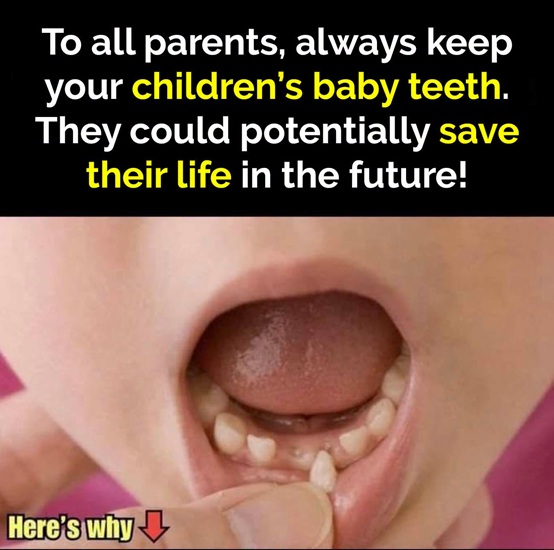
For many years, losing a baby tooth has been seen as a normal and memorable part of childhood. Children often place their teeth under pillows, parents may keep a few as keepsakes, and most baby teeth are eventually forgotten. In recent years, however, scientists have become interested in whether these tiny teeth may have value beyond childhood memories. The reason is that baby teeth contain dental pulp, and within that pulp are stem cells that researchers believe may have possible medical uses in the future.
Stem cells are important because they have the ability to develop into different kinds of cells in the body. Scientists continue to study how they may help with tissue repair, regenerative medicine, and the treatment of certain diseases. Some stem cell treatments are already used in healthcare today, especially in procedures involving bone marrow or umbilical cord blood. Researchers are now studying other possible sources of stem cells, including those found in naturally shed baby teeth.
Public interest in stem cell science has grown partly because of real medical stories involving patients who have benefited from established treatments. For example, some children with serious blood diseases or cancers, such as leukemia, have received stem cell transplants as part of their treatment. In these cases, stem cells from a suitable donor can help the body rebuild healthy blood-forming cells after intensive therapy. These treatments show that stem cell medicine already has an important role in modern healthcare.
One widely discussed example involved a young boy named Jenson Wright, who faced several battles with cancer during childhood. After earlier treatments did not work as hoped, he received a stem cell transplant using donated umbilical cord blood. Reports shared by his family said the transplant provided healthy new cells that helped support his recovery. While every patient’s situation is different and results can vary, stories like his have helped people better understand the life-saving potential of certain stem cell therapies.
Cord blood banking is already a familiar option for some families because umbilical cord blood contains stem cells that can be stored for possible future medical use. Unlike baby tooth stem cell banking, cord blood has established uses in approved treatments for certain blood disorders, immune conditions, and cancers. The success of cord blood therapies has encouraged scientists to explore whether other stem cell sources may also become useful in the years ahead.
One area of growing research involves stem cells found inside the pulp of baby teeth. Some of these cells are known as mesenchymal stem cells, and laboratory studies suggest they may have promising qualities. Researchers are investigating whether they could one day help with tissue regeneration, bone repair, nerve repair, and other medical applications. However, experts stress that many of these possible uses are still being studied and are not yet standard medical treatments.
Collecting stem cells from baby teeth is usually described as a simple process. When a child naturally loses a healthy tooth, specialized storage companies can preserve it under controlled conditions. The goal is to keep the stem cells viable in case they become useful for future therapies. Supporters see this as a form of biological preparation, while critics point out that the practical medical benefits are still uncertain.
One potential advantage of using a person’s own stem cells is that it may reduce the risk of immune rejection if future therapies become available. Because the cells come from the same individual, compatibility concerns could possibly be lower. This idea has attracted attention from researchers interested in personalized medicine and regenerative healthcare.
Even with this excitement, medical professionals advise families to be realistic. Most uses of dental stem cells remain experimental, and many proposed treatments still need years of research and clinical testing before they can become widely available. Scientific discoveries often take a long time to move from the laboratory to everyday medical practice. Parents considering baby tooth stem cell banking should understand both the possible future benefits and the current limitations.
Cost is another important factor. Private stem cell storage services often charge an initial collection fee along with ongoing storage payments. Some families may feel reassured by the idea of preserving biological material for future medical advances. Others may decide that their money is better spent on healthcare options with proven benefits today. The decision depends on each family’s priorities, budget, and comfort with emerging medical technology.
Researchers continue to study stem cells from baby teeth and publish findings about their possible abilities. Regenerative medicine has already changed some areas of healthcare, and many scientists are hopeful that future discoveries will expand treatment options. Still, it is important to separate treatments that are currently available from those that remain experimental.
The conversation about baby teeth and stem cell preservation reflects a larger interest in preventive and personalized healthcare. As medicine advances, more families are exploring ways to prepare for future health needs. This may include cord blood banking, participating in research, or simply staying informed about new developments in medical science.
In the end, baby teeth may one day be seen as more than a childhood milestone, but their role in medicine is still being studied. Scientists are continuing to explore their potential, doctors are evaluating the evidence, and families are weighing the possible benefits against the costs and uncertainties. While no one can know exactly how regenerative medicine will develop in the future, dental stem cell research remains a fascinating area that may help shape the next generation of healthcare.