ICON DEAD – With heavy hearts, we announce the passing, When you find out who he is, you will cry!

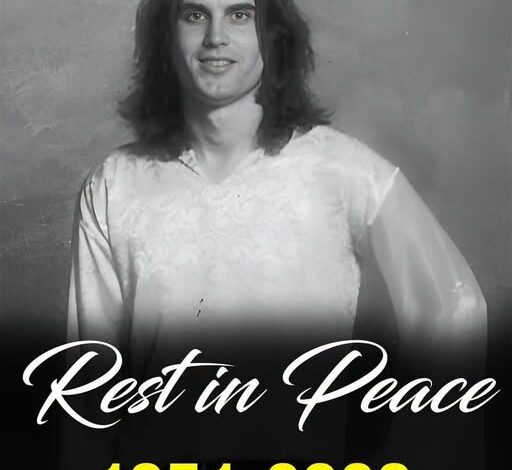
Eric Carmen’s passing at the age of 74 feels like more than the death of a gifted musician. It feels like the gentle closing of a door that had remained open in the lives of millions of people for decades.
His music was never just background sound. It lived with people. It followed them through heartbreak, longing, youth, memory, and love. His songs did not simply climb charts or fill radio playlists. They became emotional landmarks, marking moments people could return to years later with a single note, a single lyric, or the opening swell of a melody.
For many listeners, “All by Myself” was not just a power ballad. It was the sound of loneliness made honest. It captured the ache of isolation in a way that felt both deeply personal and strangely universal. It gave shape to a feeling many people had carried quietly inside themselves.
“Hungry Eyes” became tied to romance, nostalgia, and the kind of cinematic longing that defined an era. It was a song that seemed to understand the tension between desire and tenderness, between wanting someone and being moved by them.
And “Go All the Way,” from his time with the Raspberries, carried the energy of youth, urgency, and rebellion. It was bold, bright, and unforgettable, a reminder of the rock-and-roll spirit that helped shape Carmen’s early career.
That was Eric Carmen’s quiet genius.
He wrote feelings.
Not just melodies.
Not just hooks.
Not just songs built to be remembered.
He wrote the emotional language of moments people often struggle to explain. He understood longing. He understood vulnerability. He understood the strange beauty of sadness when it is given a melody. His music had the rare ability to feel both dramatic and intimate, as if it belonged on a stage and in someone’s private memory at the same time.
What made Carmen’s work endure was not only his talent, but his sincerity. There was no distance between the emotion and the song. He did not seem to be performing feelings from the outside. He seemed to be writing from the center of them. That honesty is why his music continued to find new listeners long after its first release. Trends changed. Radio changed. Popular music changed. But the emotions inside his songs remained recognizable.
People still know what it means to feel alone.
They still know what it means to want love.
They still know what it means to remember someone through a song.
That is why his music never really belonged to one decade. It traveled beyond its original time and became part of something larger. It became the soundtrack to private memories: a first dance, a breakup, a late-night drive, a movie scene, a moment of grief, a memory of someone who is no longer here.
For some artists, legacy is measured in awards, sales, and recognition. Carmen had all the markers of success, but his deeper legacy was more personal. It was found in the way people carried his songs with them. It was found in the way a voice from the radio could suddenly bring back an entire chapter of someone’s life.
Away from the spotlight, the man behind the music seemed to understand something important: fame is fragile, but love is lasting. Applause fades. Headlines move on. Charts are rewritten. But love, when it is placed honestly into art, continues to move from person to person.
That is why the words shared by his wife, Amy — “Love Is Everything” — feel so fitting. They do not sound like a slogan or a polished farewell. They sound like the simplest truth at the center of his life and work.
Love was in the songs.
Love was in the ache.
Love was in the vulnerability.
Love was in the way his music allowed people to feel less alone.
Those words feel like a summary of what Eric Carmen gave to the world. He gave listeners music that did not hide from emotion. He gave them songs that were unafraid to be tender, dramatic, wounded, romantic, and deeply human.
In an industry often built on image, Carmen’s greatest strength was feeling. He understood that the songs people remember most are not always the most complicated ones. They are the ones that reach the heart before the mind has time to explain why. They are the ones people sing when they are alone. The ones they play when they need to remember. The ones that become connected to people, places, and seasons of life.
His passing brings sadness, but it also brings a reminder of what art can do. A song can outlive the moment that created it. A melody can carry a person’s voice far beyond their lifetime. A lyric can continue speaking to strangers who were not even born when it was written.
Eric Carmen may be gone, but the emotional world he created remains. His voice still rises in the songs. His melodies still find their way into old memories and new ones. His music still reminds people of who they were, who they loved, and what they survived.
That is the rare gift of an artist whose work becomes part of people’s inner lives.
The songs go on.
The memories go on.
And so does the love he placed inside them.