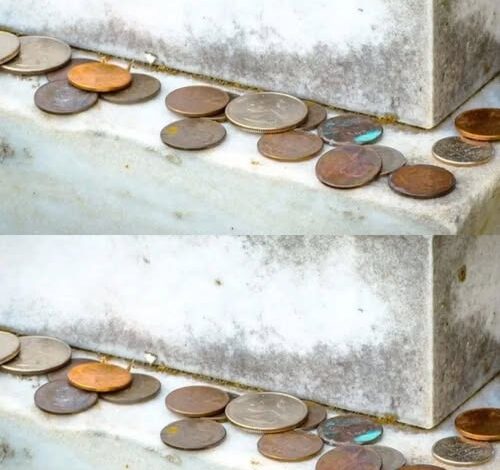
Walking through a cemetery can be a quiet and reflective experience. Among the rows of headstones, you might occasionally notice a small coin resting on top of a grave marker. At first glance, it may seem like someone simply dropped a piece of spare change and left it behind. In many cases, however—especially in military cemeteries—those coins are placed there deliberately. They are part of a long-standing tradition used to silently honor the life, sacrifice, and service of someone who served in the armed forces.
This practice allows visitors to show respect without needing to leave flowers, write messages, or speak aloud. The small coin becomes a symbolic gesture, communicating remembrance and appreciation in a simple yet meaningful way. For families visiting the graves of loved ones, finding a coin left behind by a stranger can be deeply touching. It quietly reassures them that others still recognize and remember the service member’s contributions and sacrifices.
The tradition is most often associated with the United States military, and over time, different coins have come to represent different types of connections between the visitor and the person being honored. Although the meanings are not formally official, they have become widely recognized among veterans and military communities.
The coin most commonly found on gravestones is the penny. Leaving a penny simply indicates that someone has visited the grave and wanted to pay their respects. It is a small but powerful sign that the individual’s life and service have not been forgotten. For the families of fallen service members, seeing a penny left behind can bring comfort, knowing that people—sometimes even strangers—continue to remember their loved one.
A nickel carries a slightly deeper meaning. When someone places a nickel on a gravestone, it traditionally suggests that the visitor attended basic training with the service member. Basic training is often the beginning of a soldier’s military journey, and the experience tends to create strong bonds among those who go through it together. The shared challenges, discipline, and long days of training often build friendships that last a lifetime.
A dime represents an even closer connection. When a dime is left on a grave, it usually indicates that the visitor served alongside the individual during active duty. This means they may have been stationed together, worked in the same unit, or experienced deployments side by side. Service members who serve together often develop a strong sense of trust and camaraderie, built through shared responsibilities, hardships, and moments of uncertainty.
The coin with the most profound meaning in this tradition is the quarter. Leaving a quarter on a gravestone often signifies that the person who placed it there was present when the service member passed away, or that they were with them during their final moments. This can represent a deeply personal memory and a powerful emotional connection. For many veterans, placing a quarter on a friend’s grave is a quiet way of honoring that shared moment and acknowledging the bond they carried long after their service ended.
While the exact origins of this custom are not completely clear, it became widely known during and after the Vietnam War. During that time, many veterans searched for ways to remember and honor those who had served beside them. Leaving coins became a subtle but meaningful tradition that allowed veterans to show respect without drawing attention or requiring formal ceremonies.
Another practical aspect of the tradition is that the coins collected from the gravestones are often gathered by cemetery staff and used to help maintain the cemetery grounds or support veterans’ causes. In this way, the coins also contribute to preserving the dignity and care of the resting place.
Today, the tradition continues across many military cemeteries in the United States and beyond. Visitors who understand the meaning behind the coins see them as more than just loose change. Each coin represents a silent message—one of remembrance, gratitude, and respect. Though the gesture is small, its meaning carries across time, connecting generations of service members, families, and visitors who pause for a moment to honor those who came before them.