I Thought Someone Had Spilled Rice All Over My Trash Can—Then I Looked Closer and Almost Screamed

Have you ever opened something you absolutely wish you hadn’t?
A trash bin. A forgotten container. A corner of the house you usually avoid.
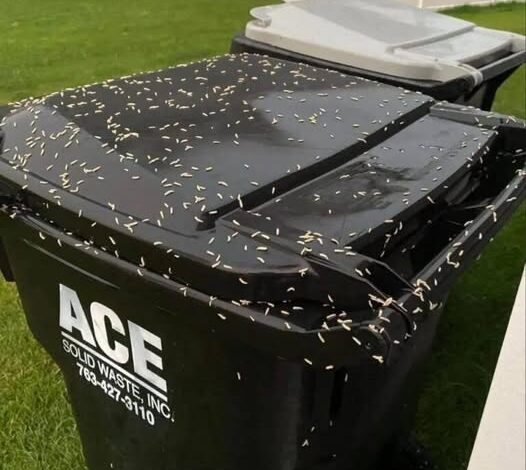
That’s exactly what happened when someone lifted the lid of their garbage can one morning and noticed something odd.
Tiny white specks scattered across the surface.
At first glance, it looked harmless—almost like grains of rice that had spilled from a torn bag.
Nothing worth worrying about.
Just a quick cleanup.
But then something shifted.
The “rice” wasn’t still.
It was moving.
Slowly.
Barely noticeably at first.
And in that moment, what seemed like a minor mess suddenly became something far more unsettling.
Those tiny, wriggling shapes weren’t rice at all.
They were maggots.
And for anyone who has ever encountered them, that realization is enough to turn an ordinary day into an immediate cleanup mission.
Where Do Maggots Actually Come From?
One of the most common misunderstandings is that maggots appear suddenly, almost as if they emerge from nowhere.
They don’t.
Maggots are the larval stage of flies.
Adult flies are constantly searching for suitable places to lay eggs, especially environments that offer moisture, warmth, and decaying organic matter.
A garbage bin is, unfortunately, close to ideal.
Even a briefly uncovered trash can can become a target. A single fly can lay dozens or even hundreds of eggs in a matter of seconds, often on:
- Meat scraps
- Fish remnants
- Overripe or rotting fruit
- Greasy food packaging
- General organic waste
Once the eggs are laid, they hatch surprisingly quickly. Depending on temperature and conditions, larvae can emerge in less than a day.
From there, growth is rapid.
What begins as invisible eggs can turn into a visible infestation almost overnight.
Why Heat Makes Everything Worse
Warm weather acts like an accelerator.
Higher temperatures speed up both egg hatching and larval development, which is why infestations are far more common in summer months.
A bin that looked perfectly fine in the morning can, by evening, become a breeding ground.
It doesn’t take long.
And it doesn’t take much.
Just heat, moisture, and a bit of leftover food waste.
How to Get Rid of Maggots Quickly
Discovering maggots can feel overwhelming, but the solution is usually straightforward if handled promptly.
1. Boiling Water
One of the fastest methods is pouring boiling water directly into the bin.
The heat kills maggots almost instantly and helps loosen any residue stuck to the surface.
It’s simple, but extremely effective.
2. Deep Cleaning the Bin
Once the visible larvae are gone, thorough cleaning is essential.
Use:
- Hot water
- Dish soap
- A disinfectant cleaner
Scrub every surface carefully, especially corners, lid edges, and seams where eggs may remain hidden.
3. Vinegar and Baking Soda
A combination of vinegar, baking soda, and hot water helps neutralize odors and break down organic residue that attracts flies in the first place.
It also helps reset the bin’s smell, making it less appealing for future infestations.
4. Salt or Garden Lime
Sprinkling salt or garden lime at the bottom of the bin helps dehydrate any remaining larvae and discourages new ones from developing.
It also reduces moisture buildup, which is a key factor in fly activity.
How to Prevent Them From Coming Back
The real solution isn’t just cleaning—it’s prevention.
A few small habits can make a big difference.
Seal Waste Properly
Always tie trash bags tightly. Loose or open bags give flies easy access to food waste.
Double-Bag High-Risk Waste
Meat, fish, and dairy products attract flies more than anything else.
Double-bagging these items helps contain odor and reduce exposure.
Keep the Lid Closed
Even a slightly open bin is an invitation.
Flies need very little opportunity to get inside.
Clean Regularly
Rinsing the bin weekly prevents buildup of residue and odor that attracts insects.
Use Liners
Trash liners reduce leaks and make cleaning significantly easier.
They act as a barrier between waste and the bin itself.
Natural Deterrents
Some people also use natural repellents such as:
- Citrus peels
- Peppermint oil
- Bay leaves
- Eucalyptus oil
- Diatomaceous earth
These won’t solve an infestation on their own, but they can help discourage flies from settling nearby.
The Part Most People Miss
Finding maggots doesn’t automatically mean a space is dirty.
It simply means conditions briefly became suitable for flies to lay eggs.
This can happen even in clean, well-maintained homes—especially during warmer months or if food waste is left exposed for a short period.
It’s less about hygiene and more about timing and environment.
The Bottom Line
If you ever open a trash bin and notice what looks like scattered grains of rice, it’s worth taking a closer look before assuming the worst.
What you find might be unpleasant—but it’s also manageable.
Maggots are one of those problems that look far worse than they are. With quick cleaning and a few preventive habits, they can be eliminated and kept from returning.
And once you understand how they form, the situation becomes less mysterious—and a lot easier to control.
Because in most cases, it isn’t about something going wrong.
It’s simply about giving flies one small opportunity… and them taking full advantage of it.