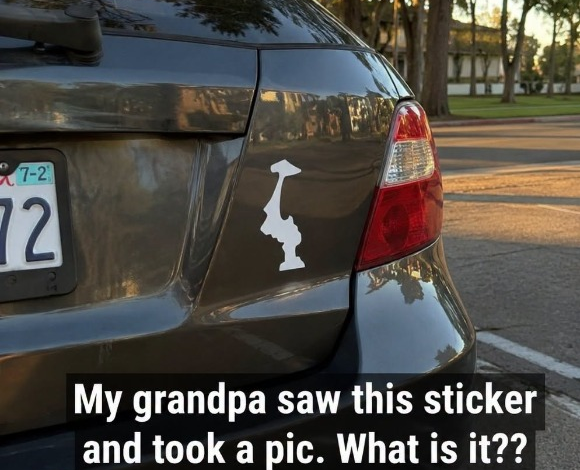
Have you ever noticed an upside-down outline of Washington State on the back of a car, truck, camper van, or SUV and wondered whether someone made a mistake?
At first glance, it can definitely look that way. Washington has a recognizable shape, especially with its jagged coastline, the Puget Sound area, and the broad stretch of land reaching east toward Idaho. So when people see that familiar outline flipped upside down, their first reaction is often confusion. It looks like a decal that was placed incorrectly, or maybe a design error that somehow went unnoticed.
But in many cases, the upside-down Washington sticker is not a mistake at all.
For many drivers, it is intentional. Over time, the flipped outline has become a quiet symbol of connection, nostalgia, and identity for people who feel tied to Washington State, even if they no longer live there. It is a small design, but for those who understand it, it can carry a lot of meaning.
The trend has become especially popular among travelers, former residents, outdoor lovers, college students, military families, road-trippers, and people who have moved away from the Pacific Northwest but still feel emotionally connected to it. Washington is the kind of place that often leaves a lasting impression. Its landscapes are dramatic, varied, and deeply memorable—from the Cascade Mountains and Olympic Peninsula to the evergreen forests, island ferries, rugged coastlines, rivers, lakes, and misty mornings that define so much of the region’s character.
For some people, Washington is where they grew up. For others, it is where they went to school, fell in love, built friendships, started a career, or discovered a love for hiking, camping, skiing, climbing, kayaking, or road trips. The state becomes more than a location on a map. It becomes part of their personal story.
That is where the upside-down decal comes in.
Rather than representing anything negative, the flipped design is often seen as a playful and meaningful way of saying, “Washington is still part of me, even if my life has turned in a different direction.” It can suggest that someone’s world has changed, that they have moved elsewhere, or that they are seeing home from a new perspective. The state may be upside down on the sticker, but its meaning remains firmly rooted.
For former Washington residents, the decal can feel like a subtle tribute to home. It may express the feeling of being displaced but still connected, of living somewhere new while carrying memories of the Pacific Northwest everywhere they go. It says something many people understand deeply: you can leave a place physically and still feel shaped by it emotionally.
For adventurers, the sticker often has another layer of meaning. Many people who display it on vans, overlanding rigs, camping vehicles, or road-trip cars associate Washington with exploration. The state is known for outdoor life, from hiking alpine trails and crossing mountain passes to camping beneath towering evergreens or watching the sun set over the water. For those people, the upside-down Washington outline may represent the place where their love of adventure began.
It can also be a conversation starter. Someone might spot the sticker at a gas station, trailhead, campground, ferry line, or parking lot and ask, “Why is Washington upside down?” That simple question can lead to stories—about favorite trails, childhood neighborhoods, college towns, national parks, road trips, family memories, or the difficulty of leaving a place that still feels like home.
That is part of what makes the design appealing. It is simple enough to be noticed, but open-ended enough to invite interpretation. It does not explain itself immediately. Instead, it makes people pause, look again, and ask what it means.
The popularity of regional decals like this also reflects a broader trend. Many people use stickers on vehicles, water bottles, laptops, coolers, and campers as a way to tell small pieces of their story. A mountain outline, state shape, national park badge, or local symbol can say something about where a person has been, what they value, and what places matter to them. These stickers may be small, but they often represent identity, memory, and belonging.
Independent artists and small outdoor-themed businesses have helped make these designs more common. Many create regional decals that celebrate state pride, travel culture, and local identity in creative ways. The upside-down Washington outline fits perfectly into that world because it is both recognizable and unusual. It takes a familiar shape and gives it a twist, turning a simple map outline into something more personal.
Of course, not everyone who uses the sticker may attach the exact same meaning to it. Some may choose it simply because it looks interesting. Others may like the humor of people thinking it was applied incorrectly. Some may see it as a symbol of being “from Washington but currently elsewhere.” Others may connect it to the idea of keeping home with them while they travel.
That flexibility is part of its charm.
The sticker does not need one official meaning to matter. Its meaning often depends on the person displaying it. For one driver, it may represent homesickness. For another, pride. For another, a favorite place to explore. For another, a reminder of a chapter of life that changed them.
In that way, the upside-down Washington decal represents something larger than geography. It speaks to the emotional power of place. Certain places stay with us long after we leave them. They shape our memories, friendships, habits, values, and sense of self. They become part of how we understand who we are.
Washington, with its mountains, water, forests, weather, cities, and wild spaces, has that effect on many people. It can be a place people miss intensely once they are gone. The smell of rain, the sight of evergreens, the outline of Mount Rainier, the gray-blue water of Puget Sound, or the feeling of driving through mountain roads can become deeply tied to memory.
So when someone places an upside-down Washington sticker on their vehicle, they may be doing more than decorating it. They may be carrying a piece of home with them. They may be honoring a place they left behind, celebrating a place they still love, or quietly reminding themselves that no matter where they go next, Washington remains part of their story.
The next time you see one of those upside-down Washington decals, it probably is not an accident. It may be a small but meaningful symbol of memory, movement, and belonging. It may belong to someone who once called Washington home, someone who still does, or someone whose best memories are tied to its mountains, coastlines, forests, and roads.
People move. Lives change. New places become home.
But some places never fully leave us.
Sometimes, they travel with us quietly on the back of a vehicle, turned upside down just enough to make people look twice.